
World's First Large Scale Diagnostics
How Digvijay Singh and Drizzle Health are preventing outbreaks by testing the environment, not just the patient.

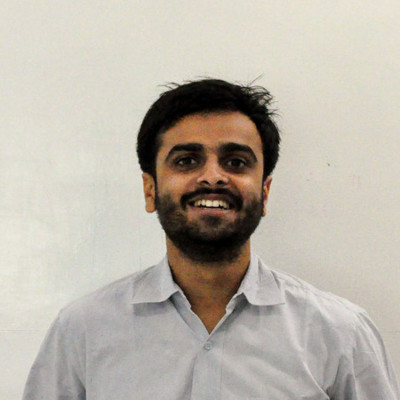
Digvijay Singh
Co-founder & CEO @ Drizzle Health
Digvijay Singh is the Co-founder & CEO of Drizzle Health, based in Baltimore, Maryland. An alumnus of IIT (BHU) Varanasi and Johns Hopkins University,...Read more
StagePre-seed
SectorHealthTech & Biotech
Education
 John Hopkins Whiting School of Engineering
 IIT (BHU), Varanasi
What is Digvijay's background and how did he get started?
Digvijay is an alumnus of IIT (BHU) Varanasi in India and later attended the Johns Hopkins Whiting School of Engineering for Bioengineering Innovation and Design. He is currently based in Baltimore, Maryland. He co-founded Drizzle Health to address fundamental gaps he identified in the field of medical diagnostics.
What is the core problem Drizzle Health is solving?
He identified a "garbage in, garbage out" problem in diagnostics. He realized that most tests fail not because the detection method (like PCR) is flawed, but because the sample itself is poor or too small. He saw that by improving the sample - specifically by concentrating it - test performance could improve dramatically, sometimes by over 1600%.
How does the technology work?
Drizzle Health uses proprietary polymer and fluidics technology to concentrate pathogens from large volumes of fluid into small samples. For example, they can take 100 liters of fluid and concentrate the pathogens into a tiny sample that can be read by existing devices like microscopes or PCR machines. This allows for detecting very low concentrations of pathogens that would otherwise be missed.
How did the company evolve from focusing on TB to broader applications?
They initially started the company focusing on Tuberculosis (TB) diagnostics during the COVID-19 pandemic. However, Digvijay soon realized the same sampling problem existed across many other fields - Typhoid, Malaria, and especially Food Safety. This led them to expand their focus to "Large Scale Diagnostics," applying their technology to test food supply chains and environmental surveillance.
What is his vision for the future of diagnostics?
Digvijay envisions a shift from reactive to preventive diagnostics. He believes we need "Large Diagnostic Models" that test air, water, and food reliability at scale. By detecting pathogens in the environment (like in a building's HVAC system or a food supply chain) before they reach humans, society can prevent outbreaks before people get sick, rather than just diagnosing them afterwards.
More Stories

Parth Shah
Medfinder
Pre-seedMay 4, 2026
Finding the Medications No One Else Can
How Parth Shah and Medfinder are helping patients locate hard-to-find medications in real time.
Read Story

Akshit Kandi
Festiva Capital
SeedFeb 4, 2026
From Salesforce to Venture Studio: Building the Data & AI Ecosystem
How Akshit Kandi is leveraging his Fortune 500 AI experience to incubate and invest in the next generation of data-driven companies.
Read Story

Lisa Yang
GREENBOX Labs
SeedFeb 2, 2026
Governing Execution for Irreplaceable Biology
How Lisa Yang and GREENBOX Labs are solving the trillion-dollar dirty data problem in physical biology.
Read Story